

If you’re thinking about living in San Marcos TX, you probably want to know more than how many people live here or how far the city is from Austin. You want to know what it’s actually like to call San Marcos home.
That’s a question I can answer from personal experience.
I’ve lived in Central Texas for more than four decades and within the San Marcos city limits since 1994. My degree came from what was then Southwest Texas State University, now Texas State University. Since 2008, I’ve worked in real estate here. During that time, I’ve watched San Marcos grow from a much smaller college town into an increasingly important part of the Austin–San Antonio corridor.
Despite that growth, many of the things that make San Marcos distinctive haven’t changed. The spring-fed San Marcos River still runs through the heart of the community. Texas State University remains a major part of the city’s identity. Downtown has a personality of its own. Established neighborhoods, new construction, river properties and acreage give home buyers very different ways to live here.
This guide isn’t intended to convince everyone that moving to San Marcos is the right decision. No community is the right fit for everyone. Instead, I’ll give you a local perspective on living in San Marcos TX. That includes housing, neighborhoods, the river, Texas State University, commuting, recreation, growth and some of the practical issues worth considering before you move.
If buying a home is part of your move, my Texas Home Buying Process – Complete Guide (Texas Home Buying Process | Complete Guide – Walker Texas Team) explains the process from preparing your finances and getting pre-approved through inspections, appraisal and closing.

Aerial view across San Marcos, Texas, showing residential neighborhoods, the city center and Texas State University.
Explore This Guide to Living in San Marcos TX
- Where Is San Marcos, Texas?
- Getting Around San Marcos and Central Texas
- What Is It Really Like Living in San Marcos TX?
- The San Marcos River and Outdoor Lifestyle
- Downtown San Marcos: Local Character, History and Everyday Life
- San Marcos History, Heritage and Local Roots
- Local Restaurants, Coffee Shops and Small Businesses
- Texas State University and Life in a College Town
- How Growth Is Changing San Marcos
- Homes and Neighborhoods in San Marcos
- Cost of Living in San Marcos TX
- Schools and Education in San Marcos
- Jobs and Employment in San Marcos
- Healthcare and Medical Services in San Marcos
- Weather and Climate in San Marcos TX
- Pros and Cons of Living in San Marcos TX
- Is San Marcos a Good Place for You to Live?
- Frequently Asked Questions About Living in San Marcos TX
- Ready to Make San Marcos Home?
Where Is San Marcos, Texas?
San Marcos is located in Central Texas along Interstate 35 between Austin and San Antonio. Most of San Marcos is located in Hays County, although the city limits also extend into portions of Caldwell, Guadalupe and Comal counties. Its position along the I-35 corridor is one of the major reasons people consider living in San Marcos TX.
Austin is north of San Marcos, while New Braunfels and San Antonio are to the south. Kyle and Buda are also directly north along I-35. Head east from San Marcos and you’ll quickly reach Martindale. Ranch Road 12 takes you west toward Wimberley, Canyon Lake, and the Texas Hill Country.
That location gives residents access to a large portion of Central Texas while allowing San Marcos to maintain an identity separate from Austin and San Antonio.
San Marcos isn’t simply an Austin suburb. The city has its own downtown, university, employment centers, parks, river, neighborhoods, businesses and community traditions. You can find information about local government, utilities, parks, transportation and other community services through https://www.sanmarcostx.gov/ .

San Marcos is centrally located along the I-35 corridor between Austin and San Antonio, with convenient connections to communities throughout Central Texas.
Getting Around San Marcos and Central Texas
Interstate Highway 35 is the primary north-south transportation route through San Marcos. It connects the city with Kyle, Buda and Austin to the north and New Braunfels and San Antonio to the south. However, if you’re living in San Marcos TX, you’ll quickly discover other important routes too. Several other highways and major roads are just as important for getting around town and reaching surrounding Central Texas communities.
Highway 80 and State Highway 123 are two of the major routes that lead directly into the heart of San Marcos, providing access to downtown and the Texas State University area. In the other direction, Highway 123 travels southeast toward Seguin, while Highway 80 heads east through Martindale and toward Luling. Highway 80 also provides convenient connections to Highway 21, San Marcos Regional Airport, Loop 110 and the SH 130 toll road. From this side of San Marcos, travelers can also connect toward Lockhart or Interstate 10 when heading east toward Houston.

Welcome to San Marcos sign along Highway 123, with the San Marcos and Texas State University skyline visible in the distance.
Ranch Road 12 is another important San Marcos route, particularly for residents on the west side of town. Today, it provides a direct connection toward Wimberley, Canyon Lake and the Texas Hill Country. Longtime residents may remember that before the Wonder World Drive extension was built, the old Ranch Road 12 route mattered too. It was one of the primary ways of traveling from the west side directly into downtown San Marcos.

Heading into San Marcos on Ranch Road 12, where the rolling Hill Country terrain transitions into the flatter landscape on the eastern side of the city.
Highway 21 is another important east-west connection, providing
Highway 21 is another important east-west connection, providing access northeast of San Marcos and connecting with Highway 80 on the east side of the city.
Newer Roads and Transportation Corridors
As San Marcos has grown, newer transportation corridors have also changed how residents move around the community. McCarty Lane and Centerpoint Road have become increasingly important on the south and southeast sides of the city as residential and commercial development has expanded.
Loop 110 is one of the most significant additions. It provides an alternative route around the east side of San Marcos, connecting the McCarty Lane area with Highway 123 and continuing north toward Yarrington Road. For many residents and commuters, Loop 110 provides another option for traveling across the east side of the San Marcos area without depending entirely on I-35.
Understanding these roads is more important than it may seem when you’re considering living in San Marcos TX. A home’s location within the city can make a noticeable difference in how easily you reach downtown, Texas State University, I-35, work, shopping and neighboring communities.
That’s why I encourage buyers who are moving to San Marcos to think beyond the number of miles between a house and their workplace. The route you actually drive every day matters. So does your access to roads such as I-35, Highway 80, Highway 123, Ranch Road 12 and Loop 110. Those factors can be just as important as the distance shown on a map.

Major roads serving San Marcos include Interstate 35, Highway 80, Highway 123, Highway 21, Ranch Road 12 and Loop 110, providing connections throughout Central Texas.
What Is It Really Like Living in San Marcos TX?
One of the interesting things about San Marcos is that it’s difficult to describe with a single label.
It’s a university town, but it isn’t only a university town. San Marcos is part of the rapidly developing Austin–San Antonio corridor. It still has a character separate from both metropolitan areas.
Housing reflects that variety.
You can find established neighborhoods such as Spring Lake Hills, newer master-planned communities such as La Cima, active-adult living at Kissing Tree, new construction in several parts of the city. Acreage properties on the outskirts of town. Just east of the city limits, the Martindale area provides another option for buyers who want to remain close to San Marcos.
We’ll explore those areas in much greater detail later in this guide.
The San Marcos River is another major part of daily life and the city’s identity. Residents have access to swimming, kayaking, tubing, parks and other outdoor recreation without leaving town. Meanwhile, Texas State University brings educational opportunities, employment, athletics, events and a constantly changing population into the community.
That’s why I don’t think a relocation guide should simply give you a list of reasons to move here. A useful guide explains what people enjoy about San Marcos. It also covers the practical considerations that come with living in a growing Central Texas city.

Downtown San Marcos comes alive at night around the historic Square, with the Hays County Courthouse dome rising above the surrounding buildings.
The River Is Part of Everyday Life in San Marcos
One of the things I appreciate about San Marcos is how accessible the river feels. You do not have to live directly on the water to enjoy it.
Public riverfront parks provide several places to reach the San Marcos River. Trails and green spaces connect portions of the river corridor. City Park, Rio Vista Park and other public spaces make it possible to swim, paddle, picnic, walk along the river or simply find a shady place to relax. The San Marcos River & Parks | Tips, Activities, Rentals & Information is a useful resource for current information about river access, parks, activities and visitor guidelines.
Rio Vista Park is one of the best-known examples. Depending on the day, you may see families swimming, people launching paddleboards, kayakers navigating the rapids or residents relaxing beneath the trees. The park also includes picnic areas, trails, sports courts, restrooms and direct river access.
There is also an important distinction between living
There is also an important distinction between living here and visiting during the busiest part of the summer. San Marcos currently uses a managed-access program at Rio Vista Park on designated summer weekends and holidays. Adults visiting from outside the qualifying local area pay an entry fee. Eligible local participants can register for a free Rio Vista Park Entry Pass. Because fees and access policies can change, residents and visitors should check the city’s current Rio Vista Park Entry Pass | City of San Marcos, TX before heading to the park.
That may sound like a small detail, but it illustrates something larger about living in San Marcos TX. The river is a major regional attraction, especially during the summer. It is also a neighborhood amenity that local residents can enjoy throughout the year.
Summer weekends can be busy. However, a quiet weekday morning, an evening after work or a cooler day outside peak tubing season can feel completely different.
As someone who has lived in San Marcos for decades, I think that distinction matters. The crowded river people sometimes see during a summer visit is only one version of life along the San Marcos River.

Swimming and tubing on the spring-fed San Marcos River at Rio Vista Park, one of the city’s popular outdoor recreation areas.
Swimming, Paddling and Everyday River Life
Summer tubing may get much of the attention. Residents enjoy the San Marcos River in plenty of other ways. Kayaking, canoeing, paddleboarding and swimming are all common, and different stretches of the river offer different experiences.
One of the advantages of living in San Marcos TX is that enjoying the river doesn’t necessarily require planning an entire day around it. With public access points and riverfront parks located within the city, spending an hour or two near the water can be part of an ordinary afternoon.
That’s very different from living somewhere where reaching a lake or river requires a long drive. Here, the river can become part of everyday life rather than simply a destination you visit occasionally.

A summer Thursday evening along the San Marcos River at Plaza Park, home of the long-running Summer in the Park free concert series.
Trails, Natural Areas and the Outdoors Beyond the River
The river may get most of the attention. Outdoor recreation in San Marcos doesn’t stop at the water’s edge.
San Marcos has parks, trails and protected natural areas that give residents opportunities to hike, walk, trail run, mountain bike, watch wildlife or simply spend some time outside.

A wildlife caution sign reminds hikers to stay aware of their surroundings while exploring the trails at Purgatory Creek Natural Area in San Marcos.
One of the best-known examples is Natural Areas – San Marcos Greenbelt Alliance on the west side of San Marcos. Its trails take you through a landscape that feels completely different from the river corridor, with limestone, wooded areas, open Hill Country terrain and changes in elevation.
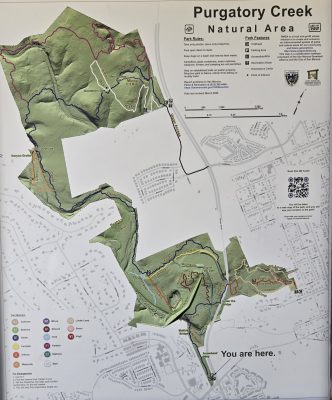
Trail map of Purgatory Creek Natural Area in San Marcos, showing the network of hiking and walking trails throughout the preserve.
Other protected areas around San Marcos include Spring Lake Natural Area, Ringtail Ridge Natural Area, Schulle Canyon Natural Area, Blanco Shoals Natural Area and Prospect Park Natural Area. Together, these spaces show just how varied the landscape can be within a relatively small area.

A shaded walking trail at Purgatory Creek Natural Area, one of San Marcos’ popular places for hiking and enjoying the outdoors.
That variety is one of my favorite things about the outdoor lifestyle here. You can spend part of the day hiking through Hill Country terrain and later cool off in the spring-fed San Marcos River without ever leaving town.
These natural areas also come with a responsibility to protect them. Staying on designated trails, respecting wildlife, properly disposing of trash and following current river and park rules all help preserve the places that make San Marcos distinctive.
For someone considering living in San Marcos TX,
For someone considering living in San Marcos TX, access to these outdoor spaces is more than something to put on a list of local attractions. The river, parks and natural areas are woven into the community itself. That means outdoor recreation can become part of everyday life rather than something reserved for a weekend trip.
Downtown San Marcos: Local Character, History and Everyday Life
The San Marcos River may define much of the outdoor lifestyle here. Downtown San Marcos helps define the personality of the community.
At the center is the historic Hays County Courthouse and the streets surrounding the Square. From there, downtown spreads into a mix of locally owned restaurants, coffee shops, boutiques, bars, live music venues, historic buildings, public art and gathering spaces. Texas State University sits just uphill, while the San Marcos River is only a short distance away.
That combination creates a downtown that feels different from the commercial centers found in many growing Texas suburbs. The Downtown Association of San Marcos includes locally owned businesses, events, entertainment and organizations working to preserve and strengthen the city’s historic downtown.

Hopkins Street, also known as Highway 80, runs through downtown San Marcos past locally owned businesses, with the San Marcos River just a few blocks away.
The San Marcos Square
The historic Square is one of the most recognizable parts of San Marcos. The centerpiece is the 1909 Hays County Courthouse, surrounded by shops, restaurants and businesses.
However, downtown is more than the blocks immediately surrounding the courthouse.

The historic Hays County Courthouse stands at the center of the Downtown San Marcos Square, one of the city’s most recognizable landmarks.
Walk a little farther and you will find murals, Kissing Alley, older commercial buildings, restaurants, coffee shops and businesses that reflect different eras of San Marcos. The city recognizes The Downtown Historic District ( Historic Landmarks and Districts | City of San Marcos, TX) as one of seven locally designated historic districts. Both the Downtown Historic District and part of the Belvin Street Historic District are listed on the National Register of Historic Places. That history is still visible today.
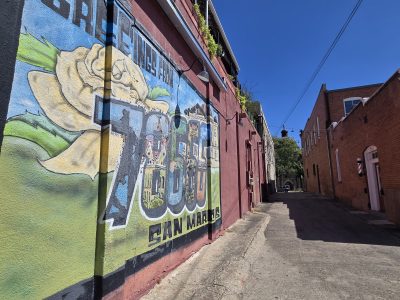
The colorful Kissing Alley mural adds to the distinctive character of downtown San Marcos just steps from the historic Square.
For someone researching living in San Marcos TX, this matters. Downtown isn’t isolated from the rest of the community. The city’s Downtown Area Plan describes downtown as a place intended to connect neighborhoods with the San Marcos River, Texas State University and other parts of the city.
In practical terms, several of the things people associate most closely with San Marcos—the Square, university, historic neighborhoods and river—are concentrated relatively close together.
Heritage and Roots That Are Still Part of San Marcos Today
For my family, the history surrounding the San Marcos Square is more than something we read about on a historical marker.
My wife, Melissa, has family roots in the San Marcos area dating back to the early 1800s. Generations of her family have been part of the San Marcos and Hays County story. Today, a portion of her family history is represented inside the historic courthouse itself.
The Council for the Indigenous & Tejano Community | San Marcos, TX inside the Hays County Historic Courthouse explores an important part of the story of San Marcos. The exhibit covers the area’s Indigenous peoples, the establishment of San Marcos de Neve, Spanish colonization, the formation of Hays County, Mexican vaqueros. Generations of Tejano families who helped shape this community.
That history is personal for us. My father-in-law and his family’s heritage are included in the exhibit. That makes walking through the courthouse a very different experience for our family. The people and stories displayed there aren’t simply names from San Marcos history. They are part of our family’s history as well.

Members of my wife Melissa’s family gathered at the Indigenous and Tejano history exhibit inside the historic Hays County Courthouse, where the Cruz family’s history and connection to San Marcos are represented.
That personal connection is also a reminder that understanding San Marcos requires looking much further back than the city’s growth over the last few decades. That history reaches well before the founding of modern San Marcos in 1851.
In fact, the human history surrounding the headwaters
In fact, the human history surrounding the headwaters of the San Marcos River reaches back thousands of years. Archaeological evidence discovered around Spring Lake shows human occupation dating back more than 13,000 years, from the Paleoindian period through later prehistoric and historic eras. Because of that remarkable archaeological record Exploring Spring Lake: the Archaeology and Culture of One of America’s Oldest Communities : Texas State University Spring Lake is regarded as one of the longest continuously inhabited places in North America.
There is a reason people have been drawn to this place for so long. The springs provided a dependable source of fresh water. Around them, the landscape offered fish, wildlife, plants, and other resources. Thousands of years before today’s subdivisions, shopping centers, Texas State University, or the Downtown Square existed, people were already living around these springs and along the river.

A Texas State University glass-bottom boat crosses Spring Lake, where artesian springs feed the headwaters of the San Marcos River.
That deeper history adds important context to the Indigenous and Tejano heritage represented in the Hays County Historic Courthouse today. It also puts my own family’s connection to San Marcos into perspective. My wife’s family is one part of a much larger story of generations of people who have called this area home.
That story didn't stop with the people who
That story didn’t stop with the people who lived around the springs thousands of years ago, or with the Indigenous and Tejano families whose histories are represented in the courthouse. Different communities continued to shape San Marcos as the city developed, each leaving its own mark on the places, neighborhoods, institutions, and traditions we recognize today.
One of the most important of those stories is the African American history of San Marcos.
African American Heritage and the Dunbar Community
Following the Civil War, freed African American families established homes and built a community in what became the Dunbar neighborhood. Over generations, Dunbar developed into an important center of Black family life, education, churches, businesses, music, and civic life in San Marcos.
Much of that history is still visible today.
The Dunbar Historic District — Preservation Texas remains one of the places where you can see the connection between San Marcos’ past and present. Dunbar includes several important historic sites, including Home | Calaboose ,Cephas House | San Marcos, TX, Facilities • Eddie Durham Park. Other places associated with generations of African American life in San Marcos.
Calaboose African American History Museum preserves photographs, documents, artifacts and stories connected to African American history in San Marcos and Hays County. That building itself is part of that history. It served different purposes over the years before becoming a museum dedicated to preserving and sharing the experiences of the local Black community.
Another important piece of the neighborhood’s history is the Cephas House, associated with Ulysses S. Cephas. A blacksmith, carpenter, musician, entrepreneur, and community leader, Cephas was part of a generation of African American residents who helped build the community that developed around Dunbar.
Music is also an important part of this story.
San Marcos native Eddie Durham Historical Marker became
San Marcos native Eddie Durham Historical Marker became an influential jazz musician, composer, arranger. Early pioneer of the electric guitar in jazz. His career took him far beyond Central Texas. His San Marcos roots remain part of the city’s history and are remembered locally through Eddie Durham Park in the Dunbar neighborhood.
For an even deeper look at his life and music, Eddie Durham 30 minute documentary by Texas State University – YouTube
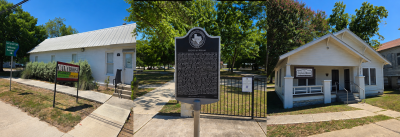
Calaboose African American History Museum, Eddie Durham historical marker, and Cephas House preserve important pieces of African American history and heritage in San Marcos, Texas.
The Indigenous, Tejano, and African American histories of San Marcos are different stories, and each deserves to be understood on its own. Together, however, they help explain a community whose roots go much deeper than the rapid growth most people associate with Central Texas today.
People Who Helped Put San Marcos on the Map
For a community its size, San Marcos has had some remarkable connections to people who went on to influence American politics, music, sports, literature, and culture.
Perhaps the most historically significant is Lyndon B. Johnson. Long before becoming the 36th President of the United States, Johnson came to San Marcos in 1927 to attend what was then Southwest Texas State Teachers College. He graduated in 1930, and his experiences as a student and young teacher helped shape a public-service career that eventually took him to the White House.
His connection to San Marcos remains visible today through Texas State University, the https://lbjmuseum.com/ – The Lyndon Baines Johnson Museum of San Marcos ) located on the Guadalupe St. side of the downtown square.

The LBJ Museum of San Marcos on the historic downtown Square explores Lyndon B. Johnson’s years in Central Texas and his connection to San Marcos and Texas State University.
San Marcos also occupies an important place in Texas music history.
George Strait attended Southwest Texas State University and began performing with the Ace in the Hole Band at San Marcos’ cheathamstreet.com before becoming one of the most successful country music artists of all time. Cheatham Street itself became an important part of the Texas music scene under founder Kent Finlay, a songwriter and mentor who helped provide a stage for generations of emerging Texas musicians.

Cheatham Street Warehouse is a legendary San Marcos music venue known for its deep ties to Texas music and generations of songwriters and performers.
San Marcos Connections to Sports, Literature and Music
San Marcos has also produced extraordinary athletic talent. Charles Austin Charles Austin (2002) – Hall of Honor – Texas State Athletics, a San Marcos native and Texas State alumnus, won the Olympic gold medal in the high jump at the 1996 Atlanta Games, setting an Olympic record in the process. His achievements are another example of someone whose story began here and eventually reached the world stage.
The city’s influence extends into literature and education as well. Tomas Rivera About The Award : Tomás Rivera Book Award : Texas State University an influential Mexican American author, educator. Texas State alumnus, earned his bachelor’s degree here before becoming an important voice in Chicano literature and eventually a university chancellor.
And, as we discussed in the Dunbar section, San Marcos native Eddie Durham was making his own mark on American music decades before many of these names became famous. His work as a jazz guitarist, trombonist, composer and arranger became part of a musical legacy that extended far beyond his hometown.
These aren't the only notable people connected to
These aren’t the only notable people connected to San Marcos. They illustrate something I think is easy to overlook. San Marcos has never existed simply in the shadow of Austin or San Antonio. For generations, people who studied, performed, worked, grew up, or built their lives here have gone on to influence Texas and, in some cases, the country.
That is another piece of the character and history behind living in San Marcos TX today.
A Historic Community That Continues to Change
San Marcos has never stopped evolving. The community I know today is built on all of these layers of history, even as new generations of residents continue adding their own chapter to the story.
I’ve lived in San Marcos since 1994. I’ve watched the city grow and change while still holding onto much of the character, history. Sense of community that make San Marcos unique.
For me, all these stories belong together.
When I talk with someone considering living in San Marcos TX, I think that perspective matters. San Marcos isn’t simply another fast-growing city between Austin and San Antonio. It isn’t defined by Texas State University alone. Rather, it is a community shaped over thousands of years by the springs and river, by Indigenous peoples, Tejano and African American communities, longtime local families, the university. Generations of people who have made San Marcos their home.
That history is part of the character you still experience here today.
Local Restaurants, Coffee Shops and Small Businesses
One thing I have always liked about San Marcos is that locally owned businesses remain an important part of the city’s identity.
Downtown is a good example. Instead of being dominated entirely by national chains, you’ll find independent restaurants, coffee shops, boutiques, resale and vintage stores, nightlife and other small businesses mixed throughout the area. If you want to explore some of those local options, the San Marcos Texas Convention and Visitor Bureau offers a guide to downtown restaurants, shopping, entertainment and things to do.
You might meet someone for coffee in the morning, have lunch downtown, browse a local shop or attend an event on the Square. You might also come back in the evening for dinner or live music. The experience can change considerably depending on the time of day and day of the week.

Longtime businesses and historic storefronts surrounding the downtown San Marcos Square, viewed from the Hays County Courthouse lawn near the Jack C. Hays statue.
A College Town — But Not Just a College Town
You cannot explain what it is like to live in San Marcos without talking about Texas State University.
https://www.txst.edu is physically and culturally connected to the city. Its campus rises immediately north of downtown. Students, faculty, employees, alumni, sporting events and university activities all contribute to the rhythm of San Marcos.

Old Main, one of the most recognizable landmarks on the Texas State University campus in San Marcos.
There is no question that you can feel the university’s presence. Certain areas get busier when students return for the fall semester. Game days, graduation weekends and major university events bring additional activity. Summer can feel different once a portion of the student population leaves town.
But calling San Marcos simply a “college town” misses a large part of the story.
Families have lived here for generations. Professionals commute north toward Austin and south toward New Braunfels and San Antonio. Retirees, business owners, university employees, longtime residents and newcomers all share the community.
That mix of longtime residents and newcomers continues to evolve as San Marcos grows. I’ve written more about San Marcos Real Estate: San Marcos Texas Is Growing Faster Than Almost Anywhere – Walker Texas Team for readers who want a deeper look at how the city has evolved.
How Growth Is Changing San Marcos
That mixture of old and new is another part of everyday life here.
San Marcos has historic neighborhoods, mature trees, older homes and buildings that have been part of the community for generations. At the same time, new neighborhoods, apartments, retail centers and commercial development have expanded outward as the city and surrounding Central Texas region have grown.
You can see that contrast simply by driving across town. Long-established parts of San Marcos sit alongside areas experiencing substantial residential and commercial development. That growth continues to influence how different parts of the city look and feel.
For someone considering a move, those differences become especially important when deciding where to live. That question leads directly to the housing options and neighborhoods found throughout San Marcos.

Mature trees and historic homes give this established San Marcos neighborhood its distinctive character near downtown.
Homes and Neighborhoods in San Marcos
One of the things that surprises some people about living in San Marcos TX is how much the housing landscape can change from one part of the city to another.
San Marcos isn’t a community where every neighborhood looks the same. You can find historic homes near downtown, established neighborhoods shaded by mature trees, newer master-planned communities, homes on larger lots, townhomes, condos. Properties with acreage outside the more developed parts of town.
There are also homes near the San Marcos River and neighborhoods convenient to Texas State University, adding another layer to the choices buyers encounter around the city.
That variety is one reason I encourage buyers to think beyond price and square footage when deciding where they want to live.

Mature oak trees shade Franklin Street, an established residential neighborhood in San Marcos, Texas.
Older and Established San Marcos Neighborhoods
Some of the most established residential areas of San Marcos are close to downtown and the city’s historic core.
These areas can offer mature trees, larger or more distinctive lots. Homes built across several different architectural periods. Depending on the street, you may see everything from historic homes to mid-century houses and properties that have been extensively renovated.
That variety can be appealing, but older homes also deserve careful evaluation.
Electrical systems, plumbing, foundations, roofs, previous remodeling, drainage. Energy efficiency can vary considerably from one property to another. Two homes built during the same decade can have very different histories depending on how they have been maintained and updated.
For buyers who appreciate established neighborhoods, however, these areas can offer something that is difficult to reproduce in new construction. That includes mature landscaping and a sense of place that has developed over decades.
If you’re preparing to purchase a home, my Texas Home Buying Process | Complete Guide – Walker Texas Team explains financing, inspections, appraisal, title, closing and the other major steps Texas buyers should understand.

The Belvin Street Historic District features tree-lined streets and historic homes near downtown San Marcos, Texas.
Newer Communities and New Construction
San Marcos has also experienced significant residential development as the city and the broader Austin–San Antonio corridor has grown.
Newer communities generally offer a different experience from the city’s older neighborhoods. Buyers may find recently built homes, modern floor plans, neighborhood amenities, sidewalks, community open spaces. Homes designed around today’s expectations for kitchens, primary suites, storage, and energy efficiency.
One example is La Cima San Marcos: Builders & Enclaves Guide – Walker Texas Team, a large master-planned community on the west side of San Marcos. Other new-home developments can be found in different parts of the city and surrounding area.

Entrance to La Cima, a master-planned residential community in San Marcos, Texas.
New construction isn’t automatically the right choice for every buyer, just as an older home isn’t automatically the better choice.
The decision often comes down to lifestyle, location, lot size, maintenance expectations, neighborhood amenities, commute. How much value a buyer places on newer finishes versus an established setting.
San Marcos Isn’t Just One Type of Landscape
Location within San Marcos can also change the physical setting around your home.
The physical landscape can vary considerably across the San Marcos area. Some properties are near the river and lower-lying areas. Others sit among rolling Hill Country terrain, limestone, oak trees and noticeable elevation changes. Travel toward the eastern side of the area, and the landscape gradually becomes flatter and more open.
Those differences can affect more than the view.
Topography, drainage, soil conditions, road access and lot configuration can all matter. Proximity to flood-prone areas can also become important when evaluating an individual property.
The San Marcos River is one of the city’s greatest natural assets. Buyers should also understand that living near a river, creek, or drainage area requires additional due diligence. A beautiful property and a property with flood risk can sometimes be the same property. Buyers can review current FEMA Flood Map Service Center | Welcome! as an initial resource, although property-specific due diligence is still important. If living along the water is part of what attracts you to this area, my guide to Waterfront Homes and Property in Central Texas – Walker Texas Team covers additional considerations for waterfront buyers.

A view of San Marcos and Texas State University across the Central Texas landscape.
City Neighborhood or More Room Outside Town?
Another decision buyers sometimes face is whether they actually want to live inside San Marcos or simply want to be near it.
Outside the more developed portions of the city, buyers may encounter larger lots, acreage, rural properties. Homes where the surroundings feel very different from a subdivision closer to downtown.
More land can provide privacy and space, but it can also introduce additional considerations.

Entrance to Summer Mountain Ranch off Ranch Road 12 west of San Marcos, offering a Hill Country setting on the way toward Wimberley. Residential Homes with acreage
A property outside the city may rely on a private well or water supplier instead of city water. Septic systems may replace municipal sewer service. Road maintenance, internet availability, deed restrictions, agricultural uses, and property taxes can also differ depending on the location.
I’ve worked with residential, acreage, farm and ranch properties throughout this part of Central Texas. These are exactly the kinds of details I want buyers to understand before they fall in love with a property.
Buyers considering larger acreage can also read my guide to What to Expect When Buying a Farm or Ranch in Central Texas. Covers several issues that don’t typically arise with a home in a traditional subdivision.
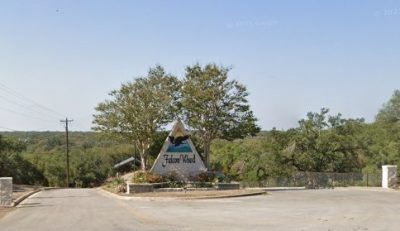
Entrance to Falcon Wood, an established residential community off Ranch Road 12 on the west side of San Marcos, with homes on larger acreage lots.
There Isn’t One “Best” Neighborhood in San Marcos
People moving to the area often ask me what the best neighborhood in San Marcos is.
I don’t think there is one answer.
A buyer who wants to be close to downtown and the river may have very different priorities. That buyer may want something very different from someone who wants newer construction, a larger yard, acreage, or convenient access to I-35. Someone connected to Texas State University may prioritize location differently from a buyer who regularly commutes toward Austin or San Antonio.
Instead of asking which neighborhood is “best,” I think the more useful question is:
Which part of San Marcos best fits the way you want to live?
That means considering more than the house itself. Think about your commute, how often you want to be near the river or downtown, whether you prefer an established or newer neighborhood, how much yard or land you want. What kind of surroundings you want to see when you come home.
What I Tell Buyers About Choosing a Home in San Marcos
After decades of living in San Marcos and years of helping people buy and sell real estate here, I’ve learned something important. Two homes with similar prices and square footage can offer completely different lifestyles depending on where they are located.
That’s why I encourage buyers to spend some time experiencing different parts of San Marcos before making a decision.
Drive the route you would take to work. Visit the area during different times of day. See how long it takes to reach the places that matter to you. Pay attention to the terrain, surrounding development, traffic patterns, and the general feel of the area.
Then evaluate the house.
A property can be remodeled. Kitchens can be updated. You can change flooring, paint, and landscaping.
You cannot move the property to another part of San Marcos.
For someone considering living in San Marcos TX, understanding these differences is one of the most important steps toward finding a home that fits not only your budget. The way you actually want to live.
Cost of Living in San Marcos TX
Cost of living is naturally one of the biggest questions people have when considering a move to San Marcos.
The answer depends heavily on the way you choose to live. Housing is usually the largest expense. Property taxes, utilities, insurance, transportation and everyday spending can all affect the actual cost of living here.
That is also why I would be careful with websites that reduce the cost of living in San Marcos to a single score or percentage. Those numbers can be useful for broad comparisons. They don’t necessarily reflect what a particular household will spend after moving here.
Housing Is Usually the Biggest Variable
For homeowners, the cost of a property involves considerably more than the purchase price.
Your monthly housing expense may include principal and interest, property taxes, homeowner’s insurance and, depending on the property and financing, mortgage insurance or homeowner’s association fees.
Those expenses can vary substantially from one home to another, even when two properties have similar asking prices.
From a cost-of-living perspective, where and what you buy can affect your overall expenses long after closing day.
Property Taxes Deserve a Closer Look
Property taxes are an important part of homeownership throughout Texas, and San Marcos is no exception.
One mistake buyers sometimes make is comparing homes based only on the current owner’s tax bill. That number may not accurately represent what a future owner will pay.
Taxable value, applicable exemptions and the taxing jurisdictions associated with a particular property can all affect the final amount. Properties in the San Marcos area may also fall within different combinations of city, county, school district and other taxing entities depending on their location.
For that reason, I encourage buyers to investigate the tax situation for the specific property they are considering rather than relying on a general estimate for San Marcos.
Although most of San Marcos is located in Hays County, the San Marcos city limits extend into portions of four counties: Hays, Caldwell, Guadalupe and Comal. As San Marcos continues to grow and new development reaches areas near and across county boundaries, the county—and the taxing jurisdictions associated with a particular property—become important details for buyers to verify.
Property records and appraisal information can be researched
Property records and appraisal information can be researched through the Hays CAD – Official Site, Guadalupe Appraisal District – Official Site, Caldwell County Appraisal District, and Comal Appraisal District – Official Site. Because taxing jurisdictions, appraised values and exemptions can vary by property, I recommend researching the specific property rather than assuming two homes with a San Marcos address will have the same property-tax situation.

San Marcos sits in the heart of Central Texas, primarily in Hays County and near Comal, Guadalupe and Caldwell counties along the I-35 corridor between Austin and San Antonio.
Utilities Can Vary by Location and Property
Utility costs are another expense that is difficult to summarize with one number.
Inside San Marcos, many properties receive services through municipal or other established utility providers. Outside the city limits, the situation can be different. Depending on the property, water may come from another utility provider or a private well. Wastewater may involve a septic system rather than municipal sewer service.

Crystal Clear water tower near Cottonwood Creek, a residential community on the east side of San Marcos off Highway 123.
From a cost-of-living standpoint, the important takeaway is that buyers should understand which services a property uses and what those services are likely to cost before purchasing it.
Depending on the property, electric and water service may come from different providers. Within and around San Marcos, those can include the https://sanmarcostx.gov/192/Start-or-Stop-Services, https://www.bluebonnet.coop/, and https://www.crystalclearsud.org/. Nearby communities and rural areas may use still other providers, including https://www.martindalewater.org/ and https://maxwellwsc.com/
That is another reason buyers should verify utility providers for the specific address rather than assuming service based solely on the property’s mailing address or proximity to San Marcos.
Electricity usage can also vary significantly depending on the size, age and energy efficiency of the home, as well as personal habits. Central Texas summers can place substantial demands on air-conditioning systems. Energy efficiency is worth considering when comparing properties.

The City of San Marcos Utilities Office on Highway 123 provides utility billing and other city services for San Marcos residents.
Transportation Costs Depend on Your Daily Routine
San Marcos’ location between Austin and San Antonio can create employment and lifestyle opportunities beyond the city itself, but commuting has a cost.
Someone who works locally may have a very different monthly transportation budget from someone driving toward Austin several days a week. Fuel, vehicle maintenance, tolls and the amount of time spent on the road can all become part of the real cost of choosing where to live.
From a cost-of-living standpoint, the important point is financial: a home that appears less expensive can sometimes cost more in other ways if it substantially increases your daily commute.
That is one reason I encourage buyers to consider the complete picture rather than comparing homes solely by purchase price.
Everyday Expenses and Shopping
San Marcos has grocery stores, restaurants, retail centers, local businesses and everyday services within the community. Residents don’t generally need to travel to Austin or San Antonio for routine purchases. The main grocery stores in San Marcos include Texas favorites H-E-B | Curbside Pickup & Grocery Delivery | HEB.com, with three locations, Walmart | Save Money. Live better., Sam’s Club – Wholesale Prices on Top Brands, Target : Expect More. Pay Less.
At the same time, spending habits make broad cost-of-living comparisons difficult. Someone who cooks primarily at home, works locally and spends weekends enjoying the river and parks may have a very different budget. That picture can look nothing like someone who commutes long distances and frequently travels elsewhere for entertainment.
That may sound obvious, but it illustrates why I think the most useful question isn’t simply:
“Is San Marcos expensive?”
A better question is:
“What would my particular lifestyle cost in San Marcos?”
For someone seriously considering living in San Marcos TX, building a realistic budget matters. Focus on housing, taxes, insurance, utilities and transportation. That approach will usually provide a much clearer answer than relying on a generic cost-of-living index.

Springtown Shopping Center in San Marcos combines ground-floor businesses with residential apartments above, reflecting mixed-use development in the city.
Schools and Education in San Marcos
For families with children, schools and educational opportunities can be an important part of deciding where to live in San Marcos.
Most of San Marcos is served by San Marcos CISD, but this is another area where boundaries matter. A San Marcos mailing address does not necessarily mean a property is located within San Marcos CISD. Depending on the location, families may encounter other school districts or educational options that aren’t immediately obvious from the property’s address.
San Marcos also has private schools, early-childhood programs and opportunities for high school students to begin earning college credit before graduation. At the higher-education level, Texas State University is located right in the heart of the community.
San Marcos Consolidated Independent School District
The primary public school district serving San Marcos is https://www.smcisd.net. The district provides public education from early childhood through high school and operates elementary schools, middle schools, San Marcos High School and additional educational programs within the community.
For families moving to San Marcos, I recommend researching the programs available through the district rather than looking only at the name of the campus associated with a particular address.
One opportunity that deserves particular attention is Early College.
Early College and Dual-Credit Opportunities
San Marcos students have opportunities to begin earning college credit while they are still in high school.
Through San Marcos CISD’s Early College High School partnership with https://www.coastalbend.edu/, participating students can complete college-level coursework while working toward their high school diploma. The program creates a pathway for students to earn both a high school diploma and an associate degree.
This is an educational opportunity my own family has experienced firsthand. My son participated in the Coastal Bend College program through San Marcos High School and earned his associate degree before he received his high school diploma.
For our family, that made the value of Early College much more tangible. Rather than simply graduating with a few college credits completed, he finished an entire associate degree before completing high school.
San Marcos CISD’s Early College High School partnership has enabled students to graduate with both a high school diploma and an associate degree. The district also offers additional college-credit opportunities for high school students.
For families with students approaching high school, these programs are worth researching. Available courses, eligibility requirements and degree pathways can change. Parents and students should verify current information directly with the district and participating college.

James and Melissa Walker celebrate with their son Jonathan after he earned his associate degree from Coastal Bend College before receiving his high school diploma.
A San Marcos Address Doesn’t Always Mean San Marcos CISD
This is one of the more important distinctions for someone buying a home in the San Marcos area.
School-district boundaries do not necessarily follow city limits, subdivision names, ZIP codes or mailing addresses. As a result, buyers shouldn’t assume that a property with San Marcos, TX in the address is automatically served by San Marcos CISD.
Blanco Vista – Master Planned Community in San Marcos is probably the most recognizable local example.
The master-planned community is on the northern side of San Marcos. It is within Home | Hays Consolidated Independent School District. Home | Blanco Vista Elementary School itself is a Hays CISD school with a San Marcos address. Hays CISD attendance information also identifies Blanco Vista Subdivision streets as part of the district.
Similar distinctions can become important as you travel toward the Maxwell area and other parts of northern and northeastern San Marcos. The important point for a buyer isn’t to memorize every boundary. It’s to recognize that the boundaries exist and verify the specific property.
Wimberley ISD Can Be an Option for Some San Marcos-Area Families
There is another educational option that some people moving to the western and rural portions of the San Marcos area may not realize exists.
Families who live outside the Wimberley ISD – Wimberley Independent School District boundaries can apply for an out-of-district transfer. Wimberley ISD currently states that it accepts a limited number of out-of-district students, including students from elsewhere in Hays County. Students who are accepted can attend tuition-free.
That can make Wimberley ISD an option for some families living in rural areas west of San Marcos even when their property isn’t actually located within Wimberley ISD.
However, there is an important distinction between being zoned to a school district and transferring into one.
Wimberley ISD says out-of-district applications are considered on a case-by-case and year-by-year basis. Space, attendance, academics, disciplinary history and program availability can affect acceptance, and students must reapply each year. The district also does not currently provide regular bus transportation for out-of-district students.
Therefore, families considering this option should verify the current transfer policy directly with Wimberley ISD rather than assuming a transfer will automatically be available.
Verify the School District Before Choosing a Home
Blanco Vista and the Wimberley transfer option illustrate a broader point about buying real estate around San Marcos.
A mailing address, city boundary, county boundary and school-district boundary are not necessarily the same thing.
If a particular district, campus or educational program is important to your move, verify the district and current campus assignment for the specific property you are considering. Don’t rely solely on an MLS listing, a real estate website, an older boundary map or the school attended by children living elsewhere in the general area.
Attendance zones, transfer policies and programs can change. The appropriate school district should always be the final source for current information.

The San Marcos CISD administration building, with the Downtown San Marcos skyline visible in the distance.
Private and Early-Childhood Education Options
Public schools aren’t the only educational choices available in San Marcos. The community also has several longstanding private and early-childhood education options.
One of the most established is Home – San Marcos Academy, which has been part of the San Marcos community since 1907. Today, the private Christian school serves students from PreK3 through 12th grade. It also offers a boarding program for students in grades 6 through 12.
Its campus is located along Ranch Road 12 on the west side of San Marcos.
Another local option is Hill Country Christian School, a private Christian school located on Davis Lane in San Marcos. It currently serves students from pre-kindergarten through 12th grade.
For younger children, San Marcos also has the Day School — First United Methodist Church San Marcos in Downtown San Marcos. The state-licensed program has served children since 1986 and currently provides care and early-childhood education for children from three months through pre-kindergarten, along with after-school programming.
This program has another personal connection for my family. Both of my children attended the First United Methodist Day School. It is one of the local educational programs we experienced firsthand while raising our family in San Marcos.
Rather than trying to rank these schools or
Rather than trying to rank these schools or tell families which one is “best,” I think parents are better served by doing their own research. Focus on the factors that matter specifically to their children and household.
Curriculum, academic and extracurricular programs, location, transportation, tuition where applicable, enrollment requirements and availability can all affect whether a particular option is a practical fit. Because those details can change, families should verify current information directly with each school.

Madilyn Walker celebrates her preschool graduation from the First United Methodist Church Mother’s Day Out program in San Marcos, Texas.
Texas State University and Higher Education
Higher education is another major part of San Marcos because the city is home to https://www.txst.edu. The university’s presence means residents live alongside a major public university offering undergraduate, graduate and professional educational opportunities. Its impact also extends beyond enrolled students through lectures, performances, cultural programs, athletics and other events and resources available throughout the year.
The university has a strong personal connection to my family. My wife and I are both Texas State alumni. Our son is currently a student in the McCoy College of Business and Texas State’s Honors College. In our family, Texas State isn’t simply a university located in San Marcos—it has been part of our family’s educational experience across generations.
Some households considering living in San Marcos TX value having a major university integrated into the community. That setup provides educational and cultural opportunities. Those benefits aren’t available in every city of comparable size.

The theatre building at Texas State University overlooks the water beneath the historic campus hill in San Marcos, Texas.
What Home Buyers Should Know About Schools in San Marcos
Whether you’re considering public, private or other educational options, the most important advice for someone moving to San Marcos is simple: verify the information that matters to your household before choosing a home.
With public schools, confirm the district and attendance zone directly with the appropriate school district. If you’re considering an out-of-district option such as Wimberley ISD, verify the current transfer requirements and availability. With private schools and early-childhood programs, confirm current enrollment requirements, tuition, availability and programs directly with the school.
The goal isn’t to identify one school or one part of San Marcos as the right choice for everyone. It’s to understand the options available at the particular location you’re considering so you can decide which combination of home, location and educational opportunities fits your household’s needs.
Jobs, Employment and the Local Economy in San Marcos
One question people considering a move to San Marcos often ask is whether the city has its own employment base. Another is whether most residents need to commute to Austin or San Antonio.
The answer is that San Marcos has a diverse local economy of its own. Its location between two major metropolitan areas expands the employment possibilities considerably.
Education, government, healthcare, manufacturing, distribution, retail, hospitality and small businesses all contribute to the local economy. At the same time, the I-35 corridor gives residents access to employment centers stretching north toward Kyle, Buda and Austin and south toward New Braunfels and San Antonio.
That combination is an important part of what makes San Marcos different from a community that functions primarily as a suburb of one larger city.
Texas State University Is a Major Economic Engine
It is difficult to talk about employment in San Marcos without beginning with Texas State University.
Economically, Texas State University plays an important role as a major employer and as a driver of spending, research, entrepreneurship and workforce development throughout Central Texas. Study: TXST generates nearly $8 billion economic impact for Texas : Newsroom : Texas State University found that the university generated approximately $3.2 billion in economic activity in Central Texas during fiscal year 2023–2024. The study estimated that university-related economic activity supported the equivalent of approximately 32,500 jobs across the Central Texas region.
Those numbers extend well beyond people directly employed by the university. Students, employees, visitors, construction, research and university-related businesses all create economic activity that reaches into restaurants, housing, retail, professional services and other parts of the regional economy.
For someone living in San Marcos, the result is that Texas State isn’t simply the large university on the hill overlooking Downtown. It is one of the economic anchors of the community.
Healthcare, Education and Government Provide Local Employment
Several of the community’s important employment sectors are tied to services that a growing city needs regardless of broader economic cycles.
San Marcos CISD, the City of San Marcos, Hays County and healthcare providers all contribute to the local employment base. Jobs within these sectors range from teachers, healthcare professionals and public-safety employees to administrative, technical and support positions.
The Economic & Local Business Development | City of San Marcos, TX also supports business growth, workforce development and economic vitality within the community. San Marcos’s position along the I-35 corridor between Austin and San Antonio, combined with Texas State University and access to a growing Central Texas workforce, helps give the city an economic identity that extends beyond any single industry.
Manufacturing, Distribution and Industrial Employment
One part of the San Marcos economy that newcomers may not immediately notice is its manufacturing, distribution and industrial base.
Industrial and employment areas around I-35, Clovis Barker Road, Hunter Road and other parts of the city support businesses involved in manufacturing, aerospace, materials, distribution and related industries.
The Greater San Marcos Partnership identifies a diverse manufacturing and industrial base in the area, including employers such as Home – CFan, Thermon | Industrial Heating Solutions, Pressure and Temperature Calibration – Mensor LP, Industrial Fabrication Services | Epic Piping and the H-E-B | Curbside Pickup & Grocery Delivery | HEB.com , among others.
The City of San Marcos has identified targeted industries that include aviation and aerospace, advanced manufacturing and materials, information technology, life sciences, business and support services, and regional distribution.
That matters because San Marcos isn’t dependent on one type of employer. The university may be the most visible economic institution in town. Manufacturing, logistics and industrial employers add another layer to the local employment base.

Clovis Barker Road on the southeast side of San Marcos is one of several areas of the city with industrial, warehouse, distribution, and employment uses.
Amazon Has a Significant Logistics Presence in San Marcos
Amazon has become another major part of the
Amazon has become another major part of the employment and industrial landscape in San Marcos. The company’s large SAT2 Tours (San Marcos, TX) – Amazon Tours on East McCarty Lane opened in 2016 and encompasses more than 850,000 square feet. The project was supported through a City of San Marcos – File #: Res. 2015-94R and became an important addition to the city’s growing distribution and logistics sector.
Amazon also operates a separate logistics facility on Fortuna Road in northeast San Marcos, near the Yarrington Road and Loop 110 area. Having Amazon operations in more than one part of the city is another example of local growth. San Marcos has developed a diverse employment base that extends beyond Texas State University, healthcare, government, retail and tourism.
For people considering living in San Marcos, Texas, this growing industrial and logistics sector is worth understanding. San Marcos is positioned along the I-35 corridor between Austin and San Antonio. SH 130, SH 123 and other regional routes provide additional transportation connections. That location has helped make the area attractive for distribution, manufacturing and logistics operations serving Central Texas.

Amazon’s large fulfillment center on East McCarty Lane is part of San Marcos’ growing logistics, distribution and industrial employment sector.
Retail, Tourism and Hospitality Are Also Part of the Economy
Retail and tourism are another important part of the San Marcos economy. Nowhere is that more visible than at the outlet centers along I-35.
The adjacent https://www.premiumoutlets.com/outlet/san-marcos and https://www.tanger.com/sanmarcos form one of the largest concentrations of outlet shopping in the country. Together, the two centers encompass approximately 1.2 million square feet with more than 220 name-brand and luxury stores, drawing shoppers from throughout Texas, across the United States and internationally.
The outlets aren’t simply a place where local residents shop. They are a destination that brings visitors specifically to San Marcos. The https://hayscaldwelledp.com/ estimates that the outlet centers attract approximately 14 million visitors and consumers annually.
That visitor traffic has a broader economic impact. Outlet shoppers also support local hotels, restaurants, gas stations and other businesses. The centers themselves provide retail and service-sector employment.
Retail activity is also important to the City’s finances. Sales tax is the largest source of revenue for the City of San Marcos General Fund, with the City reporting more than $38.7 million in sales-tax collections during fiscal year 2025. The City’s own financial reporting specifically identifies the Premium and Tanger outlet malls as a major component of San Marcos’s retail economy and tourism appeal.

San Marcos Premium Outlets is a major shopping destination along the I-35 corridor in San Marcos, Texas, featuring a wide selection of designer and brand-name stores.
For someone moving to San Marcos, the outlets
For someone moving to San Marcos, the outlets are therefore more than a convenient place to shop. They are part of the city’s identity as a regional destination and an important piece of the local economy.
The San Marcos River, Texas State University, sporting events, festivals and other attractions bring additional visitors throughout the year. That activity supports hotels, restaurants, entertainment businesses and other parts of the hospitality economy.
Small Businesses and Entrepreneurship Matter Too
Not every job in San Marcos comes from a university, government agency or large company.
Locally owned restaurants, professional services, contractors, retailers, real estate companies and other small businesses remain an important part of the community.
The San Marcos Area Chamber of Commerce has represented the local business community for more than 120 years. It works with the city, Hays County, San Marcos CISD, Texas State University, workforce organizations and other partners on economic and workforce development.
Workforce development is a major priority for the San Marcos Area Chamber of Commerce, with an emphasis on connecting schools, employers, career preparation and the broader business community.
That relationship between education and employment is particularly relevant in a community with a major university, public-school system, technical and Early College opportunities, and a growing base of employers.
Living in San Marcos Doesn’t Limit You to Working in San Marcos
The local employment base is only part of the picture.
Because of San Marcos’s location along the Austin–San Antonio corridor, residents can also pursue jobs outside the city without necessarily giving up living in San Marcos.
Some residents work north in Kyle, Buda or the Austin area. Others travel south toward New Braunfels or San Antonio. Remote and hybrid work have added another option for households whose jobs don’t require a daily trip to a traditional workplace.
For someone considering living in San Marcos TX, that creates an important economic advantage. You aren’t necessarily choosing between access to a local economy and access to the larger Central Texas job market. San Marcos can offer both.
Healthcare and Medical Services in San Marcos
Access to healthcare is another practical consideration when deciding where to live, especially for families, retirees and anyone who wants medical services reasonably close to home.
San Marcos has its own hospital, emergency care, primary-care providers, specialists, urgent-care options and other medical services within the community. Its location along the I-35 corridor also gives residents access to additional hospitals and specialty-care networks in Kyle, New Braunfels, Austin and San Antonio.
That combination means many routine and hospital healthcare needs can be handled locally. Larger regional medical centers remain within reach when more specialized care is needed.
CHRISTUS Santa Rosa Hospital – San Marcos
The main full-service hospital within San Marcos is CHRISTUS Santa Rosa Hospital – San Marcos, located on Wonder World Drive. The hospital provides 24-hour emergency care along with inpatient and outpatient services. Current services include surgery, intensive care, orthopedics, rehabilitation, women’s health, labor and delivery, breast care, gastroenterology, endocrinology and other medical specialties.
Its emergency department operates 24 hours a day and is currently designated as a Level IV Trauma Center, Primary Stroke Center and Accredited Chest Pain Center.
For residents, having a full-service hospital within San Marcos is an important distinction. Routine medical appointments and specialist visits will depend on the individual provider and insurance network. Residents aren’t starting from a position where hospital care automatically requires driving to Austin or San Antonio.

CHRISTUS Santa Rosa Hospital on Wonder World Drive provides hospital and healthcare services to San Marcos and the surrounding Central Texas community.
Women’s Health, Maternity and Other Specialized Care
Healthcare needs also change considerably from one household to another.
For example, CHRISTUS Santa Rosa Hospital – San Marcos provides labor and delivery services and currently operates a Level II Neonatal Intensive Care Unit (NICU) and a Level II Maternal Care facility. If a newborn requires a higher level of neonatal care, CHRISTUS also has access to its Level IV NICU at CHRISTUS Children’s in San Antonio.
Other services available through the San Marcos hospital and associated providers include areas such as orthopedics, rehabilitation, women’s health, breast care, gastrointestinal care and primary care.
I wouldn’t choose where to live based simply on a long list of medical specialties, however. If ongoing access to a particular physician, hospital system or specialty is important to your household, it makes sense to research those specific needs before moving.
Insurance networks, physicians, available specialties and medical practices can change over time. Those are details worth verifying directly with the provider and your insurance company.
Additional Hospital Care Is Available Nearby
Living in San Marcos also puts residents within reach of other Central Texas hospital systems.
One important example is Ascension Seton Hays in nearby Kyle. The hospital provides 24-hour emergency care and is currently a Level II Trauma Center and Primary Stroke Center, with additional specialty services that include cardiovascular, neurological, orthopedic and surgical care.
That regional access becomes increasingly important when someone needs a type or level of care that may not be available at the San Marcos hospital.
Depending on the medical need, residents can also travel north toward the larger healthcare systems in Austin or south toward New Braunfels and San Antonio. The best destination isn’t necessarily the closest hospital. It can depend on the specialty, physician, insurance network and level of care required.
This is another example of how San Marcos’s Central Texas location can matter in everyday life. The city has healthcare infrastructure of its own without being isolated from the much larger medical networks available throughout the Austin–San Antonio corridor.
Primary Care, Urgent Care and Everyday Medical Needs
Not every healthcare need involves a hospital.
San Marcos residents also have access to primary care, urgent care, diagnostic services, rehabilitation and medical practices serving a range of routine healthcare needs. CHRISTUS itself provides primary-care and other outpatient services in the area. Independent practices and other healthcare providers add additional choices.
For someone relocating to San Marcos, I think the more useful approach is to identify the type of healthcare your household actually uses.
A young family may prioritize pediatricians and urgent care. Someone planning to retire in San Marcos may care much more about cardiology, orthopedics, rehabilitation or access to established specialists. Another household may need regular treatment through a particular medical network.
Those differences are why I wouldn’t describe healthcare access simply by counting doctors or clinics.
The better question is whether the providers and services you personally need are conveniently available from the part of San Marcos where you are considering living.
Healthcare Is Another Reason Location Matters
San Marcos isn’t geographically huge, but where you live can still affect how quickly and conveniently you reach the services you use regularly.
CHRISTUS Santa Rosa Hospital – San Marcos is on Wonder World Drive, providing relatively direct access from several major roads serving the city. Residents on the northern side of San Marcos also have access toward Kyle and Ascension Seton Hays. I-35 connects the community with additional medical facilities to both the north and south.
That doesn’t mean healthcare should determine where everyone buys a home. For many households, it won’t.
If frequent medical appointments, a particular hospital network or specialized care are part of your life, consider those needs when comparing different parts of the San Marcos area. The distance to a provider may look short on a map. The route you actually drive can matter just as much.
Weather and Climate in San Marcos TX
Weather is one of those parts of living in San Marcos that can be difficult to understand from an annual average.
San Marcos has a generally warm Central Texas climate with long, hot summers and comparatively mild winters. Spring and fall can bring some of the most comfortable weather of the year, but temperatures can change quickly. Severe thunderstorms, drought, flash flooding, occasional freezes and other weather events are all realities residents should understand.
If you’re moving here from another part of the country, the biggest adjustment will probably be the summer heat.
Summers in San Marcos Are Hot
There is no reason to sugarcoat this one: Central Texas summers can be very hot.
July and August are typically among the hottest parts of the year. Extended periods of temperatures in the 90s are normal. During particularly hot stretches, temperatures can reach or exceed 100 degrees.
That affects everyday life in ways that go beyond deciding whether to spend the afternoon outside.
Air conditioning is an important part of living in Central Texas. The age and efficiency of a home’s HVAC system can affect both comfort and summer utility costs. Shade, insulation, windows, attic ventilation and the orientation of a house can also become more noticeable when temperatures remain high for extended periods.
Weather is another reason I encourage buyers to look at the condition and efficiency of a home’s major systems rather than focusing entirely on cosmetic features.
Summer heat also changes how many residents use the outdoors. Activities along the river, trails and parks often shift toward mornings and evenings during the hottest part of the year.
Of course, San Marcos has one significant advantage when temperatures climb: the spring-fed San Marcos River. We have already covered the river in detail. There is a reason spending time in and around the water is such an established part of summer life here.

The spring-fed San Marcos River at Rio Vista Park offers a popular swimming and recreation spot in San Marcos, Texas.
Winters Are Usually Mild, but Freezes Do Happen
Winters in San Marcos are generally much milder than those experienced in northern parts of the country.
Many winter days are comfortable enough for outdoor activities, and prolonged periods of snow and ice are unusual. However, “mild winter” does not mean San Marcos never experiences freezing weather.
Cold fronts can push temperatures below freezing, and Central Texas occasionally experiences hard freezes, freezing rain or ice. Those events can affect roads, landscaping, exposed plumbing and utilities.
For homeowners, basic winter preparation can include protecting exposed pipes, knowing how to shut off the home’s water supply, caring for pets and plants. Paying attention to forecasts when a strong cold front approaches.
The City of San Marcos Emergency Preparedness | City of San Marcos, TX resources encourage residents to prepare in advance for extreme heat, freezing temperatures, storms, floods and other severe-weather events rather than waiting until an emergency is underway.
Spring and Fall Can Be Some of the Best Times to Be Outside
Spring and fall provide a different side of the San Marcos climate.
There are periods when temperatures are comfortable enough to spend much of the day outside. Can make these seasons particularly enjoyable for hiking, walking downtown, spending time along the river or attending community events.
However, spring in Central Texas can also bring rapidly changing weather.
Thunderstorms may produce heavy rain, lightning, strong winds and hail. Severe weather doesn’t occur every day—or even every week—but it is something residents learn to pay attention to when conditions are favorable.
Fall can also vary considerably from year to year. Summer heat sometimes hangs on longer than newcomers expect. The arrival of a strong cold front can change temperatures surprisingly quickly.
That variability is part of Central Texas weather. A calendar date doesn’t always tell you what the day outside is going to feel like.
Drought and Water Conservation Are Part of Central Texas Life
San Marcos may be famous for its clear spring-fed river. That doesn’t mean the area is immune to drought.
Extended dry periods can affect aquifer levels, landscaping, water supplies and outdoor watering.
The City of San Marcos provides Water & Energy Conservation | City of San Marcos, TX and can impose watering restrictions when conditions require them.
For homeowners, drought can influence decisions about landscaping and irrigation. Native and drought-tolerant plants, efficient irrigation and understanding local watering rules can become practical considerations, particularly during prolonged periods of hot, dry weather.
I would not base a home-buying decision on whatever drought stage happens to be in effect on a particular day. Those conditions change. Instead, someone moving to San Marcos should simply understand that water conservation and periodic drought restrictions are part of living in Central Texas.
Heavy Rain and Flash Flooding Deserve Respect
Central Texas weather can sometimes swing from drought conditions to intense rainfall.
San Marcos has a well-documented history of flooding. The city identifies flooding as one of the most significant natural hazards facing the community. Heavy rainfall can cause creeks, drainage areas, low-water crossings and other locations to rise quickly.
From the standpoint of simply living in San Marcos, the more important lesson is to take heavy rain and flash-flood warnings seriously.
A road you normally travel may not be safe during a major rain event. Low-water crossings can become dangerous quickly, and residents should never attempt to drive through flooded roadways. The City of San Marcos provides Flood Prevention | City of San Marcos, TX and encourages residents to monitor weather conditions and emergency alerts during significant storms.
One useful resource for residents is WarnCentralTexas.org – Free Emergency Alerts for Central Texas, the regional emergency-notification system used by the City of San Marcos to distribute weather warnings, evacuation notices and other emergency information.

Severe thunderstorms, lightning, hail, high winds, and other weather events are among the risks that can contribute to homeowners insurance claims and rising costs in Texas.
What the Weather Means When You’re Choosing a Home
Climate may not determine which part of San Marcos you choose. It can affect what you look for in a house.
The condition and age of the HVAC system, insulation, windows, drainage, roof condition, shade and landscaping can all become more meaningful once you’ve experienced a few Central Texas summers and thunderstorms.
A large west-facing window may look beautiful during a showing but can feel different on an August afternoon. Mature shade trees can be a significant amenity. Likewise, drainage that seems unimportant on a sunny day deserves closer attention when evaluating a property.
Those are the kinds of practical details that don’t always show up in listing photographs.
For someone considering living in San Marcos TX, I would describe the climate this way: expect hot summers, generally mild winters, beautiful stretches of spring and fall. Occasional weather extremes that deserve preparation and respect.
You don’t need to be afraid of Central Texas weather, but you should understand it.
Pros and Cons of Living in San Marcos TX
After living in San Marcos since 1994, I’ve seen the community change considerably. There are many things I appreciate about living here. San Marcos isn’t going to be the right fit for everyone.
If you’re considering moving to San Marcos, I think it’s useful to look at both sides.
Pros of Living in San Marcos
The San Marcos River is part of everyday life.
Few communities in Central Texas have a natural feature as closely connected to daily life as the spring-fed San Marcos River. Residents can swim, kayak, paddleboard, walk along the river or enjoy the surrounding parks without leaving town. For people who value outdoor recreation, that is a significant advantage.
San Marcos has an identity of its own.
Although San Marcos sits between Austin and San Antonio, it isn’t simply a suburb of either city. Downtown, the historic Square, Texas State University, the river, longtime neighborhoods, local businesses and community traditions give San Marcos a character that has developed over generations.
The location provides access to a much larger region.
San Marcos is positioned along I-35 between Austin and San Antonio, with Kyle and Buda to the north and New Braunfels immediately to the south. Residents can live in San Marcos while working, doing business or enjoying activities throughout a large portion of Central Texas.
There are many different ways to live here.
Housing isn’t limited to one type of neighborhood or property. Buyers can consider historic and established neighborhoods, newer master-planned communities, new construction, active-adult living, homes near downtown or Texas State, larger lots, and acreage in the surrounding area.
Texas State University adds opportunities that many cities this size don’t have.
Texas State contributes much more than a student population. The university brings educational opportunities, athletics, performances, cultural events, employment and other resources into the community.
Outdoor recreation extends well beyond the river.
Purgatory Creek, Spring Lake and the other natural
Purgatory Creek, Spring Lake and the other natural areas around San Marcos provide opportunities for hiking, walking, trail running, biking and enjoying the Hill Country landscape. You can experience remarkably different outdoor environments without traveling far from home.
San Marcos has substantial local services and employment while remaining connected to larger job markets.
Education, healthcare, government, manufacturing, distribution, retail, hospitality and small businesses all contribute to the local economy. At the same time, residents can access employment opportunities north and south along the Austin–San Antonio corridor.
The community has real history and local roots.
San Marcos isn’t a place that appeared because Central Texas started growing. Human history around Spring Lake reaches back thousands of years. Indigenous, Tejano, African American and other communities have all contributed to the city’s story. That history remains visible in places around town today.
Cons of Living in San Marcos
The summers are hot.
If you don’t like heat, this deserves serious consideration. Central Texas summers can include extended periods in the 90s and stretches at or above 100 degrees. Air conditioning is essential, and outdoor activities often shift toward mornings, evenings and the river during the hottest months.
Growth has brought more traffic and development.
San Marcos has grown substantially, and the surrounding I-35 corridor continues to develop. New neighborhoods, businesses and employment opportunities bring benefits. They also mean construction, additional traffic and changes to parts of the community.
I-35 can be frustrating.
Living between Austin and San Antonio provides tremendous regional access, but that doesn’t mean every trip is quick. Traffic, accidents and construction can dramatically change travel times. Someone planning to commute regularly should evaluate the actual route rather than relying only on mileage.
Property taxes and other housing expenses need careful evaluation.
Texas doesn’t have a state individual income tax. Property taxes can be a significant part of the overall cost of homeownership. Taxing jurisdictions can also vary depending on the property’s location. Buyers should evaluate the actual property rather than relying on a general San Marcos estimate.
Flooding is a real consideration in some locations.
The San Marcos River is one of the community’s greatest assets. San Marcos also has a history of flooding. Flood risk varies considerably by property and location. Buyers should investigate drainage, flood maps, insurance considerations and property-specific conditions when appropriate.
The university’s presence isn’t for everyone.
I consider Texas State University one of San
I consider Texas State University one of San Marcos’s major strengths. Buyers should understand what living in a university community means. Certain areas can become busier when students return. Game days, graduation weekends and other major events can bring additional activity.
Some boundaries and service areas can be confusing.
A San Marcos mailing address doesn’t necessarily tell you everything you need to know about a property. County boundaries, school districts, utilities, city limits and other service areas don’t always line up neatly. Buyers need to verify the details for the specific property they are considering.
San Marcos won’t provide everything available in a major metropolitan city.
San Marcos has healthcare, shopping, restaurants, entertainment and everyday services of its own. Some specialized medical care, major entertainment, certain retailers and other services may require traveling to Austin, San Antonio or another nearby community.
The Pros and Cons Depend on What Matters to You
One person’s advantage can be another person’s drawback.
Someone who loves being close to the river and Texas State may see those as two of the strongest reasons to live here. Another buyer may care much more about acreage, a quieter setting or convenient access to I-35.
The same is true of growth. Some people appreciate new restaurants, businesses, neighborhoods and employment opportunities. Others would prefer San Marcos to remain closer to the smaller community they remember from years ago.
That’s why I don’t think a simple list of pros and cons can tell you whether you should move to San Marcos.
What it can do is help you ask better questions.
After decades of living here and years of helping people buy and sell real estate in the area, my advice is to experience San Marcos as someone who lives here rather than only as someone visiting for a weekend.
Drive through different parts of town. Visit downtown and the river. Explore some of the established neighborhoods and newer communities. Drive the route you would actually take to work. Pay attention to the terrain, traffic and surrounding development.
Most importantly, think about the way you want to live.
For someone whose priorities fit what San Marcos
For someone whose priorities fit what San Marcos offers, the combination can be hard to duplicate elsewhere in Central Texas. That includes the river, location, outdoor lifestyle, university, history and variety of housing.
For someone whose priorities don’t fit those things, another community may be a better choice.
And that’s exactly why the question shouldn’t simply be whether San Marcos is a good place to live.
The better question is:
Is San Marcos a good place for you to live?
For many people, San Marcos TX can be a very good place to live, particularly if you value outdoor recreation, a strong sense of community, access to the Austin–San Antonio corridor and a city that still has an identity of its own.
But whether San Marcos is a good place for you depends much more on your lifestyle, budget, work location and priorities than it does on any national ranking or “best places to live” list.
I’ve lived in San Marcos since 1994. One of the things I’ve learned is that people can experience this community very differently depending on where they live and what they want from it.
Someone who wants to be close to downtown, Texas State University and the river may look at San Marcos very differently. That buyer may see the city differently from someone searching for a newer home in a master-planned community. Another buyer may want acreage, fewer nearby neighbors and a more rural setting while still being close enough to San Marcos for shopping and everyday services.
All of those lifestyles can exist within the greater San Marcos area.
Who Might Enjoy Living in San Marcos?
San Marcos may be particularly appealing if you enjoy being outdoors.
Having the spring-fed San Marcos River running through the middle of the community is something I never take for granted. Add Spring Lake, Purgatory Creek and the other parks and natural areas around town. Residents have outdoor opportunities that would be difficult to recreate artificially.
San Marcos can also make sense for people who want access to larger cities without necessarily living in one. Austin and San Antonio are both within the broader region. Kyle, Buda and New Braunfels provide additional employment, shopping, healthcare and entertainment options along the I-35 corridor.
People who appreciate a university environment may also enjoy what Texas State brings to the community. The university contributes educational opportunities, athletics, performances, employment and a steady flow of people and ideas into San Marcos.
At the same time, San Marcos has a history and identity that extend far beyond the university. Longtime families, locally owned businesses, historic neighborhoods, cultural traditions and generations of residents are just as much a part of the community.
That combination is one of the things I value most about living here.
Who Might Prefer Somewhere Else?
San Marcos isn’t going to fit everyone’s priorities.
If you want to avoid hot summers, Central Texas probably isn’t going to solve that problem.
Someone who needs to commute into Austin five days a week may decide that living farther north makes more sense after experiencing I-35 traffic. Likewise, someone who wants immediate access to the range of specialized healthcare, entertainment, restaurants or services available in a major metropolitan area may prefer Austin or San Antonio.
Other people simply want something different.
A buyer looking primarily for a smaller Hill Country community may prefer Wimberley. Someone focused on being closer to San Antonio may look farther south. Another household may prioritize a particular school district, tax structure, commute or type of housing that leads them outside San Marcos.
I don’t see that as a negative about San Marcos.
Finding the right community is about matching a location to the way you actually want to live—not convincing yourself that one city is automatically better than another.
My Perspective After Living Here for Decades
San Marcos has changed tremendously since I moved here in 1994.
There are more people, more neighborhoods, more businesses and considerably more development. Places that once felt like the edge of town no longer do. Growth continues to reshape parts of the community.
Yet many of the things that originally made San Marcos distinctive are still here.
The river still runs through town. Texas State still rises above downtown. The Square remains a gathering place. Longtime neighborhoods sit alongside newer communities. You don’t have to travel far before the landscape begins transitioning toward the Hill Country or more rural parts of Hays and the surrounding counties.
That’s why I have a difficult time reducing San Marcos to a simple list of statistics.
Living in San Marcos is ultimately about how the river, university, history, location, growth and community come together in everyday life.
If those things match what you’re looking for, San Marcos can be an excellent place to call home.
If you’re seriously considering moving here, my recommendation is to spend enough time in San Marcos to experience more than the places visitors usually see. Explore different parts of town, drive your potential commute, look at different types of neighborhoods and properties. Think about what your everyday life would actually look like here.
That's the best way to answer the question
That’s the best way to answer the question that matters most:
Not simply, “Is San Marcos TX a good place to live?” but “Is San Marcos the right place for me?”
Frequently Asked Questions About Living in San Marcos TX
When people are considering moving to San Marcos, many of the same practical questions come up. Here are straightforward answers to some of the questions I hear most often.
Is San Marcos TX a good place to live?
For many people, yes. San Marcos offers a combination of outdoor recreation, the spring-fed San Marcos River, Texas State University, a historic downtown, different housing options and a central location between Austin and San Antonio.
Whether it is the right place for you depends on your priorities. Housing budget, commute, schools, preferred lifestyle and the type of property you want can all influence whether San Marcos makes sense for your household.
After living here since 1994, my advice is to evaluate San Marcos based on how you would actually live here rather than relying solely on rankings or statistics.
Is San Marcos TX just a college town?
No. Texas State University has a major influence on San Marcos. Describing the city simply as a college town leaves out a large part of the community.
San Marcos is also home to longtime families, retirees, professionals, business owners, commuters and people who have no direct connection to the university. The city has its own employment base, historic neighborhoods, newer communities, rural properties, local businesses and cultural traditions.
Texas State is an important part of San Marcos, but it doesn’t define everything about living here.
Where is San Marcos TX?
San Marcos is in Central Texas along the I-35 corridor between Austin and San Antonio. It is approximately 30 miles south of Downtown Austin and about 50 miles northeast of Downtown San Antonio.
Kyle and Buda are north of San Marcos. New Braunfels is the next major city to the south along I-35.
This location gives San Marcos residents access to employment, healthcare, shopping, entertainment and other services throughout the larger Austin–San Antonio corridor. At the same time, they still live in a separate community with its own identity.
What county is San Marcos TX in?
Most of San Marcos is located in Hays County, and San Marcos is the Hays County seat.
However, a San Marcos mailing address does not necessarily mean the property is in Hays County. Properties with San Marcos mailing addresses can also be located in Caldwell, Guadalupe and Comal counties, particularly around the edges of the greater San Marcos area.
This distinction can be important when buying real estate. The county associated with a property can affect the appraisal district, taxing jurisdictions and other local services. School districts, utilities and city services also do not necessarily follow mailing-address or county boundaries.
If you’re considering a property with a San Marcos address, verify the actual county, taxing jurisdictions, school district, utilities and whether the property is inside the City of San Marcos or its ETJ rather than relying on the mailing address alone.
Can you commute from San Marcos to Austin?
Yes, and some San Marcos residents commute north toward Kyle, Buda and Austin for work.
However, the practical answer depends on where in Austin you need to go, what time you travel and how frequently you make the trip.
I-35 provides a direct connection, but traffic, construction and accidents can substantially affect travel times. Someone considering a regular commute should drive the actual route during the hours they expect to travel before deciding whether that commute works for them.
How far is San Marcos from San Antonio?
Downtown San Antonio is roughly 50 miles southwest of San Marcos, with I-35 providing the primary connection between the two cities.
New Braunfels and other communities along the corridor are considerably closer.
As with an Austin commute, mileage doesn’t always predict actual travel time. Traffic conditions and the specific origin and destination can make a significant difference.
What school district serves San Marcos TX?
Most of San Marcos is served by San Marcos Consolidated Independent School District (SMCISD). A San Marcos mailing address does not necessarily mean a property is within SMCISD.
For example, Blanco Vista in northern San Marcos is served by Hays CISD. Some families outside Wimberley ISD boundaries may also be able to apply for an out-of-district transfer to Wimberley ISD, subject to the district’s current policies and acceptance requirements.
School boundaries and transfer policies can change. Buyers should verify the district and assigned campuses directly with the appropriate school district for any specific property.
Does San Marcos have private schools?
Yes. Private educational options in San Marcos include San Marcos Academy and Hill Country Christian School, along with early-childhood programs such as First United Methodist Day School & Afterschool.
Programs, tuition, enrollment requirements and availability can change. Families should contact the individual school directly when evaluating their options.
Is San Marcos TX expensive to live in?
That depends considerably on the household and the type of property.
Housing is usually the largest expense, but buyers should look beyond the purchase price. Property taxes, homeowner’s insurance, utilities, homeowners’ association fees where applicable, maintenance and transportation all contribute to the actual cost of living in a particular home.
Costs can also vary substantially between properties. A newer home in a master-planned community, an older home near downtown, a rural acreage property and a waterfront home may have very different ongoing expenses.
For that reason, I recommend evaluating the total cost of owning a specific property rather than relying on a single citywide cost-of-living number.
What is the weather like in San Marcos?
San Marcos has hot Central Texas summers and generally mild winters.
Temperatures in the 90s are common during summer, with periods at or above 100 degrees possible. Winters are usually much milder, although freezes, freezing rain and occasional ice can occur.
Spring and fall can provide some of the most comfortable outdoor weather of the year. Central Texas can also experience severe thunderstorms, hail, drought and heavy rainfall.
Does San Marcos flood?
San Marcos has a history of flooding, but flood risk is not the same throughout the city.
Risk can vary considerably based on the individual property, elevation, drainage, nearby waterways and other conditions. Buyers should evaluate FEMA flood information, local resources, insurance considerations and property-specific conditions. Do not assume that being in San Marcos—or even being relatively close to the river—automatically determines a property’s flood risk.
Heavy rainfall can also affect roads and low-water crossings even when a particular home isn’t located within a mapped floodplain.
Can you swim in the San Marcos River?
Yes. Swimming, tubing, kayaking and paddleboarding are all established parts of life along the San Marcos River, although access and permitted activities vary by location.
The river is spring-fed at Spring Lake and flows through the city, providing residents with recreational opportunities very close to home.
Conditions, park rules and river regulations can change. Residents and visitors should check current City information before planning a particular activity.
What types of homes can you find in San Marcos?
San Marcos has a surprisingly broad range of housing.
Depending on location and budget, buyers may find historic homes, established neighborhoods, newer subdivisions, master-planned communities, new construction, townhomes, condominiums, active-adult communities, larger lots, rural acreage and some waterfront properties.
The landscape changes substantially as you move across the San Marcos area. Two homes with the same city in their mailing address can offer very different lifestyles.
Is San Marcos growing?
Yes. San Marcos and the surrounding I-35 corridor have experienced substantial population and development growth.
According to the City of San Marcos Population Estimates & Projections | City of San Marcos, TX, the city’s official January 1, 2026, population estimate is 91,082, with continued growth projected in the years ahead.
New housing, commercial development and employment opportunities continue to change parts of the community. Growth can bring additional services and amenities. It can also contribute to traffic, construction and changes in areas that longtime residents remember very differently.
For someone buying a home, I think it is important to consider not only what surrounds a property today but also what may be planned or developing nearby.
Do you need a car to live in San Marcos?
For most households, having a vehicle is still the most practical way to get around San Marcos and the surrounding Central Texas region.
Some areas near downtown San Marcos and Texas State University are considerably more walkable than others, and local transit options are available. However, employment, shopping, schools, medical appointments and everyday errands can be spread across different parts of the city. For more detailed information, the City of San Marcos provides information about Transit | City of San Marcos, TX options and services.
If being able to walk or use transit for a significant portion of your daily routine is important, that should be part of deciding where within San Marcos you choose to live.
Ready to Make San Marcos Home?
If you’re considering living in San Marcos TX, I hope this guide has given you a better understanding of the community. That perspective goes beyond what you would get from statistics, rankings or a quick weekend visit.
San Marcos is a place with many different sides.
It is the San Marcos River and Spring Lake. Texas State University overlooks downtown and is another defining part of the community. It is the historic Square, longtime neighborhoods and families whose connections to this area stretch back generations. At the same time, it is new neighborhoods, new businesses and continued growth along one of the fastest-changing corridors in Central Texas.
That combination of history, natural beauty, university life, growth and location is a large part of what makes San Marcos distinctive.
But as I’ve said throughout this guide, San Marcos isn’t the right place for everyone—and there isn’t one part of San Marcos that’s right for every buyer.
Someone looking for an established neighborhood near downtown may have completely different priorities from someone considering new construction. Another buyer may want acreage outside town, convenient access to I-35, proximity to the river or a property that provides more privacy and room to spread out.
The right choice depends on how you want to live.
Local Knowledge Matters When You’re Moving to San Marcos
I’ve lived in San Marcos since 1994 and in Central Texas for more than four decades. I’ve watched neighborhoods change, roads get built, development move into areas that once felt rural and San Marcos become an increasingly important part of the Austin–San Antonio corridor.
Since 2008, I’ve also worked in real estate, helping buyers and sellers throughout San Marcos and the surrounding Central Texas communities.
That experience has taught me that choosing a home here involves much more than finding the right number of bedrooms and bathrooms.
Where is the property actually located? Which county is it in? What school district serves the address? Who provides the utilities? What does the daily commute look like? How is the surrounding area developing? What should you know about drainage, terrain, taxes or the property’s particular location?
Those details can make two seemingly similar San Marcos properties very different places to live.
That’s where local knowledge becomes valuable.
Let Us Help You Explore San Marcos
If you’re thinking about buying a home in San Marcos, you don’t need to have everything figured out before contacting us.
In fact, I would rather talk with you before you’ve narrowed your search to a particular neighborhood or property.
Tell us what matters to you.
Maybe you want to be near the river or downtown. Perhaps you’re looking for newer construction, an established neighborhood with mature trees, acreage, a larger lot or easier access to a particular commute. You may still be trying to determine whether San Marcos is the right community at all.
That’s okay.
The goal isn’t to sell you on San Marcos. Our job is to help you understand your options so you can make an informed real estate decision.
The Walker Texas Team works throughout San Marcos and the surrounding Central Texas area. We’re happy to help you compare homes, properties, locations and communities based on what actually matters to you.
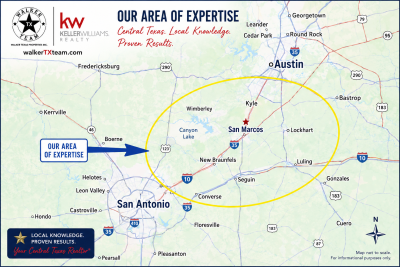
Walker Texas Team serves San Marcos and communities throughout Central Texas, with local real estate expertise along the Austin–San Antonio corridor.
If you’re ready to start exploring homes, you can Explore Homes for Sale in San Marcos TX | Walker Texas Team on our website. If you’re still in the research stage, you may also want to read our Texas Home Buying Process | Complete Guide – Walker Texas Team to understand what to expect when purchasing a home in Texas.
And if you'd rather simply talk through your
And if you’d rather simply talk through your plans first, Contact – Walker Texas Team.
Whether you’re moving across town or relocating to Central Texas for the first time, we’re here to help you understand San Marcos—not just find a house in it.
San Marcos is our home. We’d be honored to help you decide if it should become yours.

Walker Texas Team at Keller Williams Realty KW ATX—trusted real estate experts serving San Marcos, TX and the Central Texas area.