

Central Texas Semiconductor Growth: What Does It Mean for Real Estate?
What do computer chips have to do with home prices, land values, and the future of Central Texas? Potentially quite a bit. Central Texas semiconductor growth is bringing major investments, creating jobs, and expanding an industry that could influence our regional real estate market for decades.
As a lifelong Central Texan with more than 18 years in real estate, I’ve watched communities like San Marcos, Kyle, Buda, and New Braunfels undergo tremendous change. The next chapter may be shaped partly by investments happening well beyond our immediate neighborhoods.
Why Are Computer Chips So Important?
Semiconductors are small electronic components found in practically everything we use today. They’re essential to smartphones, automobiles, medical equipment, computers, electrical systems, and increasingly, artificial intelligence.
However, their importance extends beyond consumer electronics. Modern manufacturing, transportation, communications, and national defense all depend on reliable supplies of these components.
For decades, much of the world’s advanced semiconductor manufacturing has been concentrated overseas. Supply-chain disruptions have highlighted the risks of depending too heavily on foreign production.
Consequently, the United States has made domestic semiconductor manufacturing a national priority. Texas is positioning itself to play a major role.
According to the Texas Semiconductor Strategic Plan, Texas accounted for 28% of U.S. semiconductor exports in 2024.
That’s a significant industry, and Central Texas is one of its established manufacturing centers.
Samsung’s Expansion Is Changing Central Texas
Samsung has operated a major semiconductor manufacturing facility in Austin since the 1990s. More recently, the company has invested heavily in developing its new manufacturing campus in Taylor, northeast of Austin.
According to Samsung’s 2025 Economic Impact Report, its Austin and Taylor operations contributed an estimated $10.9 billion to the Central Texas economy in 2025.
The report also identified approximately 28,700 jobs supported through company operations, construction, suppliers, and related economic activity. These are not all permanent Samsung employees, but they illustrate how far the effects of one major employer can reach.
Additionally, companies such as NXP Semiconductors and Infineon Technologies have established operations in the Austin area. Equipment manufacturers, research companies, and suppliers contribute to the region’s growing semiconductor ecosystem.
Samsung has announced plans for additional manufacturing capacity in Taylor, although construction and production schedules remain subject to change.

Samsung’s semiconductor manufacturing campus in Taylor, Texas, represents a major investment in Central Texas technology and economic development, with potential impacts on jobs, housing, and commercial real estate. Image source: Samsung Austin Semiconductor.
How Central Texas Semiconductor Growth Affects Housing
Here’s where the semiconductor industry becomes particularly interesting to me as a real estate professional.
When major employers expand, they need engineers, technicians, managers, construction workers, and support personnel. Some employees relocate, while others already live in the region.
As a result, major employment centers can generate additional demand for single-family homes, apartments, rental properties, and nearby services.
However, location makes a difference. Taylor, Hutto, Round Rock, and surrounding communities are geographically closer to Samsung’s new development than San Marcos or New Braunfels.
I wouldn’t suggest that a semiconductor employee working in Taylor will automatically choose to live in San Marcos. Commuting distances, housing costs, schools, and personal preferences all influence those decisions.
Still, Central Texas operates as a connected regional economy. Corporate investment in one community can create business opportunities and employment throughout the broader area.
Over time, that can influence residential development across the Austin–San Antonio corridor.
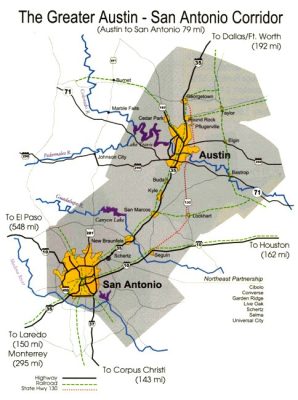
The Austin–San Antonio corridor connects some of Texas’s fastest-growing communities. As semiconductor manufacturing and technology investments expand, cities like San Marcos, Kyle, Buda, and New Braunfels could benefit from new jobs, business opportunities, and increased demand for residential and commercial real estate.
Will Semiconductor Investment Increase Home Values?
That’s probably the question many homeowners will ask.
The answer is that semiconductor investment could support long-term housing demand, but it doesn’t guarantee higher property values.
Consider what’s happening in Hays County.
According to the October 2026 Central Texas Housing Report, Hays County recorded a median residential sales price of $371,080, down 4.9% from October 2025. Meanwhile, the county had 6.9 months of housing inventory.
Those figures demonstrate something important.
Even with billions of dollars flowing into the regional economy, home prices remain influenced by mortgage rates, affordability, available inventory, and consumer confidence.
In other words, economic expansion and real estate appreciation don’t always happen at the same time.
From my perspective, the most useful question isn’t simply whether semiconductor investment will push prices higher. It’s whether sustained employment growth will strengthen demand for housing over the long term.
For buyers and sellers in San Marcos, Kyle, and surrounding communities, that distinction matters.
What About Land and Commercial Real Estate?
Residential housing is only one part of this story.
Semiconductor manufacturing involves an extensive network of suppliers and contractors. Companies provide specialized equipment, industrial gases, chemicals, transportation, maintenance, engineering, and technical services.
Consequently, continued expansion could create opportunities for industrial buildings, warehouses, flex spaces, and appropriately located commercial land.
In some cases, suppliers may prefer facilities near major semiconductor plants. Others could locate along regional transportation corridors where they can serve multiple employers.
That makes Interstate 35 and its surrounding commercial markets worth watching.
However, not every vacant parcel is suitable for industrial development. Water availability, electrical capacity, zoning, transportation access, drainage, and construction costs all affect feasibility.
I’ve worked with residential properties, acreage, farm and ranch land, and commercial real estate throughout Central Texas. One thing I’ve learned is that future development potential needs to be evaluated carefully.
A property having highway frontage or sitting near a growing community doesn’t necessarily mean it will become valuable commercial real estate.

Industrial parks, distribution centers, and commercial developments along major transportation corridors illustrate how economic growth creates opportunities beyond residential real estate. As semiconductor manufacturing expands in Central Texas, demand for industrial space, supporting businesses, and strategically located commercial properties could increase.
San Marcos Has a Role in the Region’s Future
Although San Marcos doesn’t have a semiconductor manufacturing project comparable to Samsung’s Taylor campus, our community has advantages of its own.
We’re positioned between Austin and San Antonio, with access to Interstate 35 and two major metropolitan economies.
We also have Texas State University, which contributes to workforce development, research, and regional economic activity.
The university’s STAR Park supports technology commercialization and businesses working in areas such as materials science, biotechnology, and chemistry.
Those capabilities don’t necessarily mean semiconductor companies will establish facilities here. However, they provide a foundation for attracting knowledge-based businesses and supporting advanced manufacturing.
For communities like San Marcos, Kyle, and Buda, the opportunity may be less about landing a massive chip factory and more about attracting the businesses, workers, and services that support a diversified regional economy.
Similarly, New Braunfels and surrounding communities may find opportunities through manufacturing, logistics, and related commercial development.

Texas State University’s STAR Park in San Marcos supports research, innovation, and emerging technology businesses, strengthening the region’s potential for advanced manufacturing, economic development, and high-skilled employment opportunities.
The Challenges: Water, Electricity, and Infrastructure
As exciting as semiconductor investment can be, we also need to consider the resources required to support it.
Semiconductor manufacturing requires substantial electricity and extremely clean water. These plants also need reliable transportation, specialized utilities, and wastewater treatment.
Samsung has developed significant water-recycling infrastructure at its Taylor campus. Nevertheless, increasing industrial activity places greater importance on regional water planning.
Samsung reports that its Taylor production water is sourced from the Carrizo-Wilcox Aquifer system through a third-party provider. That is different from the water sources serving many communities farther south, including parts of Hays and Comal counties. Still, water planning matters throughout Central Texas.
For those of us who live near the San Marcos River, Blanco River, Guadalupe River, and Canyon Lake, water conservation and long-term supply are familiar concerns.
Population growth also creates demand for roads, schools, housing, and public services.
As a real estate professional, I believe these issues deserve just as much attention as job announcements and economic-development incentives.
Sustainable growth means understanding what our communities can realistically support.

Canyon Lake is one of the major water resources connected to growth, conservation and water planning in Comal County.
What Should Homeowners, Buyers, and Investors Watch?
If you’re considering buying, selling, or investing in Central Texas real estate, I would pay attention to several developments.
First, watch actual hiring and permanent employment growth. A factory under construction can generate significant economic activity, but permanent operations affect the region differently.
Second, follow housing inventory and affordability. Employment growth creates opportunities only when workers can reasonably afford to live in the communities serving those jobs.
Third, pay attention to transportation and utility improvements. These investments often influence where future development becomes practical.
Finally, don’t overlook the importance of a diversified economy. Semiconductor manufacturing is significant, but Central Texas also benefits from education, healthcare, tourism, construction, technology, and other industries.
A community with a balanced employment base may be better positioned to weather changes in any one industry.
Frequently Asked Questions
Will Samsung’s Taylor factory affect San Marcos home prices?
It could contribute indirectly to regional housing demand, but there’s no established evidence that the Taylor project alone will increase San Marcos property values. Local employment, housing supply, affordability, and commuting patterns will determine much of the impact.
Are semiconductor companies creating permanent jobs?
Yes. Semiconductor manufacturing requires engineers, technicians, equipment specialists, and other employees. However, construction employment and permanent factory employment should be evaluated separately.
Could semiconductor growth increase commercial land values?
Possibly, particularly where suppliers need industrial facilities or supporting businesses. However, location, zoning, utilities, access, and actual market demand determine whether individual properties benefit.
Is water availability a concern for semiconductor manufacturing?
Yes. Semiconductor production can require substantial quantities of highly purified water. Recycling and wastewater treatment can reduce demand, but long-term water availability and responsible management remain important.
Is now a good time to buy Central Texas real estate because of semiconductor growth?
Semiconductor investment is one factor worth considering, but it shouldn’t determine a purchase by itself. Property condition, pricing, financing, location, and your long-term goals remain essential.
My Final Thoughts
I’ve spent much of my life watching Central Texas grow, and I’ve seen firsthand how economic development can change communities.
Central Texas semiconductor growth represents an important opportunity for our region. It could bring additional investment, create employment, strengthen businesses, and influence future real estate demand.
But growth also brings responsibilities.
We need to consider water availability, infrastructure, housing affordability, and the long-term character of our communities.
The goal shouldn’t simply be to grow bigger. It should be to grow intelligently.
Whether you’re a homeowner wondering how regional development might affect your property, a buyer considering a move to Central Texas, or an investor evaluating land and commercial opportunities, understanding these economic trends is increasingly important.
If you’re considering buying or selling residential property, acreage, waterfront property, or commercial real estate in San Marcos, Kyle, Buda, New Braunfels, Wimberley, or the surrounding communities, I’d welcome the opportunity to discuss what we’re seeing in the local market.
Walker Texas Team | Keller Williams
Written by James Walker | Walker Texas Team
James Walker is an Associated Broker and Team Lead of the Walker Texas Team at Keller Williams Realty, with more than 18 years of experience serving Central Texas. A lifelong area resident, James specializes in residential real estate, waterfront properties, land and acreage, farm and ranch properties, and commercial real estate throughout San Marcos, Kyle, Buda, New Braunfels, Wimberley, Canyon Lake, and surrounding communities.
Through his blog, James shares local market insights, economic development news, and community information to help homeowners, buyers, sellers, and investors better understand the forces shaping Central Texas real estate.
Learn more: About James Walker
Contact us at: Contact – Walker Texas Team